Why Your AI-Generated Ads Are Failing in 2026 (And the Creative Solution)
AI advertising tools promised efficiency, but they delivered fatigue. Discover why brands like Aerie are ditching AI ads and how the creative renaissance is reshaping digital marketing in 2026.

Why Your AI-Generated Ads Are Failing in 2026 (And the Creative Solution)
Meta Description: AI ad fatigue is real in 2026. Learn why brands like McDonald's failed with AI ads while Aerie thrived by banning them. Discover the creativity + data formula that wins.
---
The promise of AI-powered advertising was seductive: perfect optimization, infinite variations, and performance metrics that climbed endlessly upward. Yet as we enter 2026, a growing number of brands are discovering an uncomfortable truth—their AI-generated ads are failing, not because the technology is flawed, but because audiences have tuned out.
The phenomenon has a name: AI ad fatigue. Consumers are exhausted by the sameness, the predictability, and the emotional hollowness of algorithmically optimized creative. While performance dashboards may show technical perfection, the human response tells a different story. Engagement plateaus. Brand recall fades. The ads blend into an indistinguishable blur of optimized nothingness.
The McDonald's Christmas Disaster: When Optimization Meets Emotional Bankruptcy
In December 2025, McDonald's unveiled its Christmas campaign—a technically flawless AI-generated advertisement featuring snow-dusted golden arches, perfectly timed music cues, and optimized color palettes designed to trigger nostalgic warmth[1]. The creative team had fed the AI system decades of successful holiday campaigns, consumer sentiment data, and performance benchmarks from previous years.
The result was an ad that checked every technical box while missing the one thing that mattered: emotional authenticity. Audiences reacted with unprecedented negativity. Social media erupted with criticism, not about the visual quality or production values, but about what the ad represented—a brand that had outsourced its soul to an algorithm[1].
The backlash revealed a critical insight. McDonald's had optimized for metrics that no longer mattered. Click-through rates and engagement scores had become proxies for success, but they failed to capture whether anyone actually cared. The AI had learned to mimic the surface patterns of effective advertising without understanding the underlying human truth: people don't connect with brands because of perfect optimization—they connect because they feel seen, understood, and valued.
Aerie's Anti-AI Stance: The Authenticity Premium
While McDonald's stumbled, American Eagle's lingerie brand Aerie took the opposite approach. In early 2026, the company publicly announced it would ban AI-generated imagery from all advertising campaigns[1]. The decision was both philosophical and strategic. Aerie had built its brand identity on body positivity and authentic representation—values that felt fundamentally incompatible with synthetic imagery.
The market response was immediate and overwhelming. Engagement rates surged to levels the brand hadn't seen in years. Customer sentiment scores climbed. Sales followed. Aerie had tapped into something deeper than algorithmic optimization: the hunger for brands that "sound human" and demonstrate ethical clarity in an increasingly automated landscape[1].
The Aerie case study illustrates a broader shift in consumer psychology. As AI-generated content floods every channel, authenticity becomes the scarcest and most valuable commodity. Audiences reward brands that make the harder choice—investing in human creativity, accepting imperfection, and prioritizing emotional resonance over technical optimization.
The Creativity + Data Synergy: A New Framework for 2026
The lesson from 2026 is not that AI has no role in advertising—it's that AI alone is insufficient. The brands winning in this new landscape have discovered a different formula: creativity + data synergy[1].
This framework recognizes that data and creativity answer fundamentally different questions. Data tells you who your audience is, when they're most receptive, and what content formats perform best. Creativity answers why they should care, how your brand should sound, and what emotional truth will make them remember you[1].
Neither works well in isolation anymore. Data without creativity produces the McDonald's problem—technically perfect ads that leave audiences cold. Creativity without data produces beautiful work that never reaches the right people at the right time. The synergy between them creates something more powerful: emotionally resonant messages delivered with precision.
Consider how this framework operates in practice. Data might reveal that your target audience engages most heavily with video content on Instagram between 7-9 PM on weekdays. That's valuable intelligence. But data can't tell you what story will make them stop scrolling, what tone will earn their trust, or what message will turn attention into action. That requires human insight, cultural fluency, and creative courage—the domains where AI remains fundamentally limited.
The Generative AI Paradox: Faster Production, Creative Sameness
By 2026, most advertisers are expected to use generative AI tools for video ad production[1]. The efficiency gains are undeniable—content that once required weeks of production can now be generated in hours. Costs have plummeted. Iteration cycles have accelerated. Yet this democratization of production has created an unexpected problem: creative sameness at scale.
When everyone uses the same AI tools, trained on the same datasets, optimizing for the same metrics, the output converges toward a predictable mean. Ads begin to look, sound, and feel identical across industries and brands. The very efficiency that makes AI attractive becomes its strategic liability. In a feed filled with AI-generated sameness, the brands that stand out are those willing to invest in distinctiveness—even if it means accepting lower technical optimization scores.
This paradox forces a fundamental question: what is the purpose of advertising? If the goal is simply to maximize short-term engagement metrics, AI optimization delivers. But if the goal is to build long-term brand equity, emotional connection, and customer loyalty, the calculus changes. These outcomes require something AI cannot provide: a coherent brand voice that reflects genuine human values and creative vision.
Brand Storytelling Returns: The Human-Centric Imperative
The AI ad fatigue phenomenon has triggered a renaissance in brand storytelling. Audiences in 2026 are actively seeking brands that communicate who they are, not just what they sell[1]. They want to understand the values driving decisions, the humans behind the products, and the purpose beyond profit.
This shift demands a different approach to content creation. Instead of optimizing every piece of creative for immediate conversion, brands must invest in narrative arcs that unfold over time. Instead of A/B testing every headline to death, they must develop distinctive voices that remain consistent across channels. Instead of chasing algorithmic favor, they must prioritize building genuine relationships with audiences who share their values.
The brands succeeding in this environment share common characteristics. They demonstrate ethical clarity in how they use technology. They invest in human creativity even when AI offers cheaper alternatives. They accept that not every piece of content will achieve maximum optimization scores, because some messages are worth sharing even if they don't perform perfectly in testing.
Practical Strategies for the Creativity + Data Era
For marketing leaders navigating 2026, the path forward requires balancing technological capability with human judgment. Here are the strategic principles that separate winners from those still chasing optimization ghosts:
Audit for AI sameness. Review your recent creative output honestly. Does it look and sound like everyone else in your category? If audiences couldn't identify your brand without seeing the logo, you have a distinctiveness problem that more AI optimization won't solve.
Invest in human creative talent. The efficiency of AI makes human creativity more valuable, not less. Allocate budget to writers, designers, and strategists who can develop ideas that algorithms wouldn't generate. Their work becomes your competitive advantage.
Use data to inform, not dictate. Let analytics reveal audience insights and content opportunities, but resist the temptation to let metrics make creative decisions. The best performing ad in testing isn't always the one that builds long-term brand value.
Develop brand voice guidelines that AI can't replicate. Document the distinctive elements of how your brand communicates—the specific phrases you use, the topics you address, the tone you strike. Make these guidelines explicit enough that human creators can follow them, but nuanced enough that AI tools struggle to mimic them convincingly.
Test for emotional resonance, not just engagement. Supplement traditional performance metrics with qualitative research that measures whether audiences actually care about your message. Brand tracking studies, sentiment analysis, and customer interviews reveal truths that click-through rates miss.
Be transparent about AI use. Audiences in 2026 are sophisticated enough to recognize synthetic content. Rather than trying to hide AI involvement, be explicit about where and how you use it. Transparency builds trust; deception erodes it.
The Competitive Advantage of Being Human
As we move deeper into 2026, the most successful brands will be those that recognize AI as a tool rather than a strategy. They will use automation to handle repetitive tasks, data analysis to inform decisions, and generative tools to accelerate production. But they will reserve the most important creative decisions—the ones that define brand identity and emotional positioning—for human judgment.
This approach requires courage. It means accepting that your ads might not achieve the highest possible optimization scores. It means investing in creative development that can't be directly attributed to immediate ROI. It means trusting that long-term brand building matters more than short-term performance metrics.
The McDonald's and Aerie case studies prove that this courage pays dividends. Audiences are desperate for brands that feel authentic, that demonstrate values beyond profit maximization, and that treat them as humans rather than data points to be optimized. The brands that win in 2026 won't be the ones with the most sophisticated AI tools—they'll be the ones that remember why creativity mattered in the first place.
The future of advertising isn't choosing between creativity and data, human insight and algorithmic optimization, brand building and performance marketing. It's recognizing that the most powerful outcomes emerge when these elements work in synergy, with human creativity setting the strategic direction and AI tools amplifying execution. That's the formula that turns AI ad fatigue into competitive advantage.
---
References
[1] Boston Institute of Analytics. (2026, January 2). Digital Marketing in 2026: Why Creativity + Data Will Beat Pure Performance. Retrieved from https://bostoninstituteofanalytics.org/blog/digital-marketing-in-2026-why-creativity-data-will-beat-pure-performance/
Related Articles

新服務反應差?香港品牌如何用 7 日「快閃登陸頁」驗證市場,搶佔 2026 先機?
新課程、新服務推廣效果不佳?本文拆解香港品牌如何利用 7 日「快閃登陸頁」策略,以低成本快速進行市場驗證,避免資源浪費,並介紹 CTRL Y 的 AI Growth Starter 方案如何助您搶佔市場先機。
「耳朵經濟」新藍海:2026 年香港品牌如何利用 Spotify 及 Podcast 程式化音訊廣告,精準觸及「開車族」與「健身族」?
視覺廣告日益飽和,香港品牌應如何突圍?本文深入探討 2026 年程式化音訊廣告(Programmatic Audio Ads)的龐大潛力,教您如何利用 Spotify 及 Podcast 精準觸及螢幕外的目標客群,開拓「耳朵經濟」新藍海。
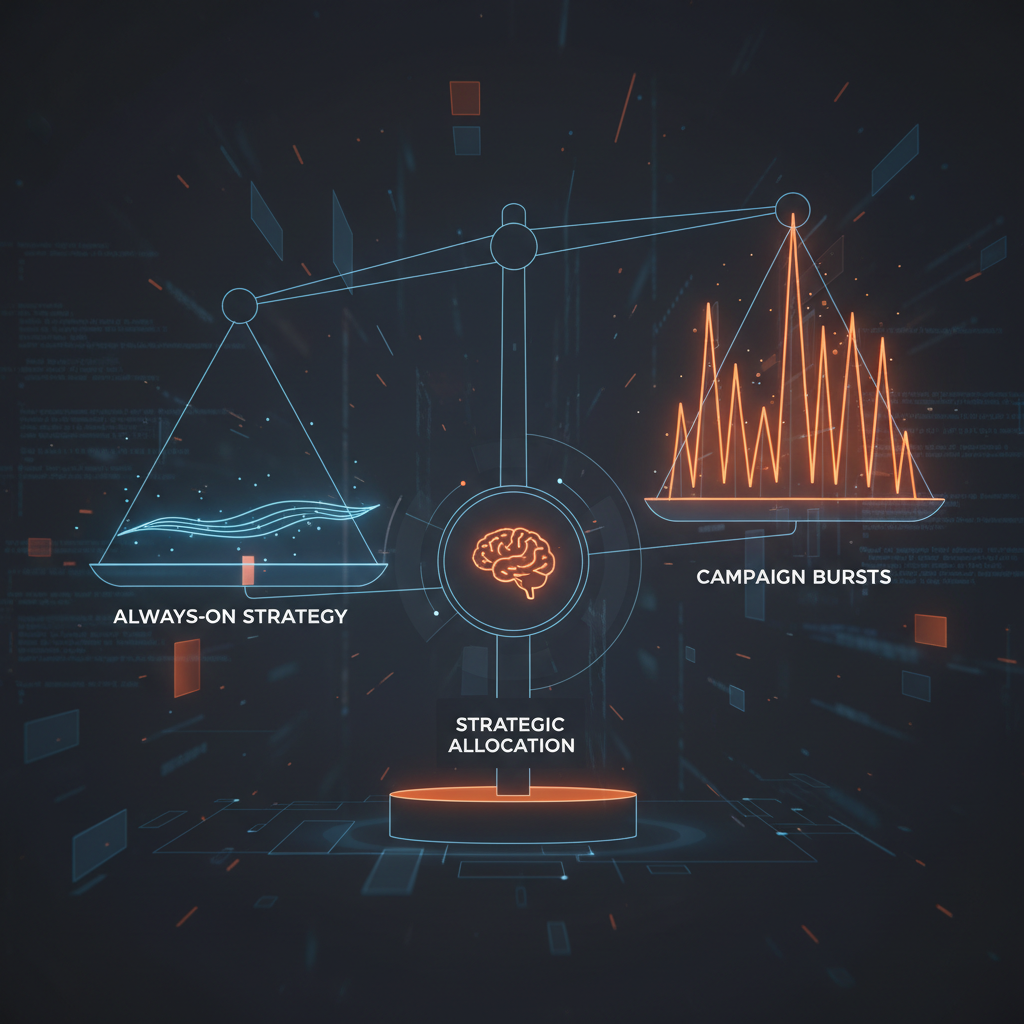
「All-in 雙 11 定係養長線?」2026 香港品牌必讀:拆解「恆常 (Always-On)」vs「爆發 (Campaign Burst)」廣告預算分配黃金比例
2026 年香港市場波動,廣告預算分配成為關鍵。本文深入拆解「恆常 Always-On」與「爆發 Campaign Burst」兩大策略,助你制定結合數據與 AI 的最佳數碼營銷策略,實現可持續增長。